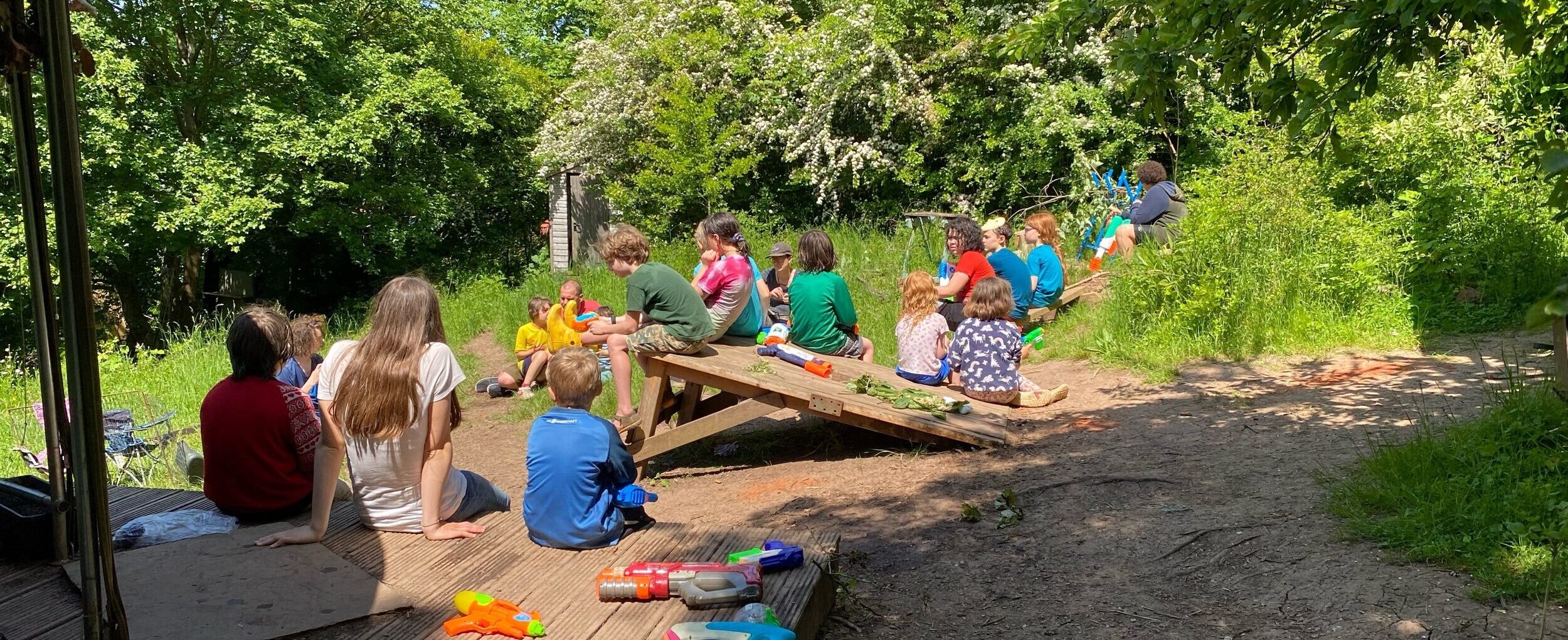
The Garden has been offering an innovative, self-directed learning community since February 2016. Our evidence-based approach supports and protects the normal development of creativity, critical thinking, curiosity, collaboration, consent and agency.
Rather than the narrow and disengaging teaching of what is measurable, we offer young people the chance to grow their own unique set of learning competencies and to develop rich conceptual frameworks of understanding, which are transferable to any context.
The Garden is:
- Unconditional: No punishment or reward, supporting empathy and deepening understanding, rather than judgement, as well as preserving motivation and curiosity.
- Needs-based: We support children in their emotional (co-)regulation, self-awareness and capacity to understand and articulate their needs.
- Power sharing: Young people have an equal say to adults wherever safe and possible to do so.
- Participatory: We use consensus and consent-based decision-making to make agreements about how we share space.
- Conflict-supportive: Our transformative justice approach acknowledges power dynamics (individual, group and systemic) while creating a structure for repair based on empathy with high accountability and low blame.
- Self-directed: No compulsory subject-based learning, instead using techniques such as inquiry-led learning to develop critical thinking and rich conceptual frameworks of understanding.
- Project-based: We use real world project management tools, such as Agile, to support young people to identify goals and develop collaborative and individual interdisciplinary projects.
- Technology-positive: We actively support young people in developing healthy, safe and ethical relationships with technology, which cannot be achieved through prohibition.
What we are:
- A community for families committed to deschooling and decolonising
- A place where young people’s autonomy is respected
- Practitioners who take an evidence-based and always evolving approach
- A needs-based, anti-racist and LGBTQ+ friendly environment
- A technology positive space
- Trauma-informed
- Part of a broader liberatory culture change movement
What we are not:
- A drop-in activity
- Home education childcare
- School but a bit nicer
- A last resort because families need to work and all other avenues have failed (unless the family are genuinely committed to deschooling).
- A place for highly traumatised young people, who need one to one support, or have not yet had the space to deschool enough to meaningfully join a community.
- Dogmatically associated with any particular ideology, educational or otherwise